|
||||
Home
| What's New?
| Get Started
| Site Map
| The Crash
| Contribute
| Resources
| Disclaimer
| Contact
|
||||
Wilderness Survival - My Top Two BooksSee Also: Australian Field Guides and Nature Books, Survival Books, Survival DVDs, Books by Tom Brown, Jr., Permaculture, Self Sufficiency And Sustainable Living Books, Dystopian Fiction / Novels, Books About Near-Death Experiences, and Survival Courses Near Sydney and the Blue Mountains. This books I am writing about on this page are more for longer-term wilderness living skills. For short-term wilderness survival skills (such as you would need if you got lost in the wilderness), see Survival Essentials: How To Survive In The Wilderness. The book I recommend on that page is "Wilderness Survival" by Gregory J. Davenport. If I had to learn wilderness survival, or survive with only two books, they would be these:
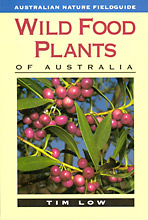
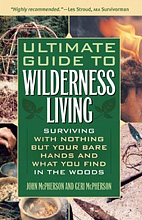
Wild Food Plants of Australia is an easy pick since there is no other field guide for Australian edible plants (that I know of) that even comes close. I would recommend reading chapter 11 on bush survival (wilderness survival) as one of the first parts that you read. and Naked Into the Wilderness - Primitive Wilderness Living & Survival Skills, John & Geri McPherson. which is now sold as
The second book had to be some kind of general wilderness survival book, and it was harder to decide on one favourite, since there are a lot of good ones.
It is also not a book that contains the absolute basics of wildnerness survival, such as that you can die in three minutes without air, three hours without adequate protection from the cold and wet, three days without water, and three weeks without food. I would recommend "Wilderness Survival" by Gregory J. Davenport for that kind of information. The chapters are not in ideal order, in my opinion, so it is not a book I would recommend reading from front to back, unless you are particularly keen to do that. I would recommend reading the chapters in the following order: Chapter 2: Primitive Fire & Cordage and then the other chapters as you see fit. These are the five basic wilderness survival skills that John mentions in his second book as being the ones to learn first, the core techniques that all the others depend on. (Note that he leaves out plant foods altogether, but we have the Tim Low book for that.) His five basic skills are, in order: 1) Fire, 2) cordage, 3) traps, 4) tools and 5) shelters. I have reversed the order of 4 and 5, since in all probability you will have some kind of steel-made tools with you, even if it is just one knife. It is also likely that you would have some kind of modern firemaking device with you (such as a $2 "Bic" lighter), so in that light it would be forgiveable if you were to skip the firemaking until you have mastered some of the other wilderness survival skills. (As long as you can make a good fire with a lighter, and in the wet, and in all kinds of conditions). Keep in mind also that a lighter, metal match, etc., will run out eventually, while a knife can last a very long time (if you look after it). So firemaking goes ahead of "tools". You will need some simple tools though, such as a throwing (or "rabbit") stick, but this is very easy to make. You will also (if you are prepared adequately) have access to some factory-made cordage, so making cordage is in that sense a less important wilderness survival skill than traps and shelters. There is a second volume of "Naked Into the Wilderness". I have quoted a section from it about the most important basic skills. Australian Field Guides and Nature Books australia book books skills survival wilderness Content is copyright © Survival.org.au 2005-2025 All Rights Reserved. Terms of Use. Definitely read the disclaimer before trying anything from this website, especially including the practices and skills. This website uses affiliate links – this doesn't cost you any more, but I get a commission on purchases made through the website. As an Amazon Associate I earn similarly from qualifying purchases. |
||||
 |