|
|||||||||||||||
Home
| What's New?
| Get Started
| Site Map
| The Crash
| Contribute
| Resources
| Disclaimer
| Contact
|
|||||||||||||||
How to Drain Your Hot Water Heater For Survival WaterThis page shows how to drain your hot water heater to obtain water, which could be used for survival purposes if your usual mains water supply was lost for any reason. If you have a storage-type hot water heater, there will be up to a few hundred litres of drinkable water stored in it at all times (unless you've drained it). If you don't have any other water source (such as rainwater collection tanks or your own dam), this will probably be by far your biggest source of drinkable water if there is no more mains water available.
MaintenanceDraining your hot water heater can also be done as part of regular maintenance of your hot water heater. Draining the heater to remove sediment is meant to be done periodically. This new web page also (eventually) will show how to check your pressure safety valve. Checking the valve is also a part of regular maintenance, and a stuck valve can cause your hot water heater to explode so this is a good one to pay attention to. PracticeUnless you're already a plumbing expert, draining your hot water heater is one of those things that's much easier to do once you have already done it. So it's a really good idea to practice draining it. Since it's part of regular maintenance (that a lot of people ignore) it's a good idea to do it anyway.
If you live with other people who are completely freaked out by the whole idea that eventually there will be no more town water, you can use the maintenance reason as an excuse: You could say you're draining it for maintenance, although the main reason may be to practice draining your hot water heater for survival water. Storage vs. Instantaneous Hot Water HeatersThere are two types of hot water heaters, storage and instantaneous. Instantaneous heaters heat the water instantly as it passes through the heater, while in storage heaters the hot water stored in a tank. It should be easy to tell which type you have by looking at your hot water heater. If you can see a tank then you have a storage type. If there is no tank you have an instantaneous hot water heater. If you have a storage tank type, you have a supply of water that can be used for survival purposes if this should become necessary for any reason — such as when the town water supply is cut off for an extended period of time. Survival Water From Your Water PipesIf you have an instantaneous type then — sorry — you don't have any more water in your water heater than in any other short length of pipe in your plumbing system. You may still be able to get some survival water out of your plumbing system. This will be another web page coming soon. But, basically, turn off the mains supply, then turn on the tap on highest water outlet in your house (which may be your shower) to allow air into the pipes. Then get some buckets and turn on the tap on the lowest outlet (that's far away from the other one) and see how much water comes out. This is quite easy to do and doesn't need any tools or fooling around with the plumbing. The greater the difference in height between the two taps (e.g. if you have a sloping block of land, and/or a multi storey house) and the longer the pipe distance, the more water will be there. You could also try forcing the water out by connecting an air hose to the upper tap and forcing air into the pipe, using a foot air pump or something like that connected to the tap. Tools and Equipment NeededYou will need a few tools to drain your hot water heater. The most important is a spanner to undo the nuts (either on the drain valve, if you have one, or on the cold water inlet pipes). You can use a fixed size spanner of the correct size, or a shifter spanner or wrench. If desperate you could use pliers or some other less ideal tool. Some heaters with built-in drain valves may not need a spanner. You will also want a hose to drain the water from. I used an ordinary garden hose. If there is no drain valve, you will also want one or more adapters so you can connect the hose to the tank (these are pictured further down the page). It would also be very useful to have a small (or even full size) tap that you can screw on, so you can control the flow of water. Also some teflon thread tape to seal any threads that you unscrew may be useful. I found that it wasn't needed on the compression fittings that I have, which have plastic "olives" (pictured below). TimeIt took me a whole day to perform this entire procedure, including making an unexpected trip to the hadware store, and taking all the photos and making notes on what I was doing. Where is the Drain Valve?Before you begin, have a look around your hot water heater to become familiar with its connections. There are not many. Cold water enters from a pipe at the bottom, with a tap between the wall and the hot water heater. Hot water leaves from a pipe at the top, which may be covered with some insulation (since it's hot). There will be a connection for either electricity or gas, and a thermostat control for setting the temperature of the hot water. There will also be a pressure relief safety valve at the top of the heater, and probably a pipe coming down from that, maybe draining onto the floor. Maybe there will also be a drain valve at the bottom of the heater. Since the aim of this is to drain the hot water heater, the next thing you need to do is locate where you're going to drain the water from.
I even went through a stage of reading about other people with the same problem, only to find that the drain valve was located behind a plastic cover. All they had to do was remove the cover and the drain valve was behind it. I thought that must be the answer, until I looked at my hot water heater some more, and looked some more, and, ... no cover either. Note that almost all of these web pages (and YouTube videos) aren't from Australia. I did some research and learned that my water heater, along with many Australian hot water heaters — perhaps most of them — does not have a separate drain outlet. This research included finding the manual and technical schematic drawings of my hot water heater, and talking to a plumber on the phone. What this means is if you don't have a separate drain valve, you have to drain the water from the cold water inlet by disconnecting the pipe from your plumbing. This web page shows you how to do this, and it's the only page I've found so far on the internet that does. Turn Off the Power
Use Up All the Hot WaterYou only need to do this next step when practicing draining the heater (i.e. when there is still mains water available) and there has been power/gas available recently, but in that case it's very important. If you don't have any mains water and there has been power/gas connected to your water heater recently, the water in your heater may still be very hot. So read the instructions for this step anyway. In that case, you might have to wait a few days for it to cool down before doing anything else. You can have a really long hot shower before doing the next step (and the rest of your family, if your hot water heater is big enough). Since you're going to drain all the hot water anyway, you might as well use it for something.
It may be true that since cold water enters from the bottom, then if you have an off peak system and have used some hot water that day, then the water at the bottom of the heater will be cold. Which may allow you (if you're somewhat experienced with plumbing work) enough time to disconnect the pipe and attach a tap quickly before it gets too hot to touch. But I wouldn't mess around with this. If you don't flush the entire heater with cold water first, you'll have no idea of knowing how hot the water at the bottom of the heater will be until you disonnect the pipe — and then it may be too late/hot to reconnect it. So before doing anything else, let the hot water run until the heat is all gone and the water runs cold. If this was a real survival situation, and there was no mains water, you would have no choice but to wait a few days (approximately) or until the water inside the water heater was cold enough to touch. This means that if the mains water was to suddenly go off, you won't be able to use the water in your hot water heater for a few days (or maybe a day or two if the weather is really cold and your water heater is outside). Of course if you've had no electrical power (or gas if its a gas system) for several days or longer, the water will all be cold and you can skip this step entirely.
Turn off the Cold Water Inlet TapAt this stage, your hot water heater should be full of cold water, and the heating source (either electricity or gas) turned off.
Disconnect the PlumbingIf you are blessed with a hot water heater that has a separate drain valve, you don't need to do this step and the whole process is much easier.
Once the cold water inlet tap is turned off, there will be no mains pressure supplied to the heater. Turn on a hot tap (anywhere in the house) and see that no water comes out. This will also release some of the pressure inside the tank. Then turn the hot tap off again to create an air seal / air lock that will greatly slow the flow of water out of the heater (and onto the floor) once you disconnect the inlet pipe from the heater. It's not critical if you skip this step, but if you skip it you'll probably get more water leaking onto the floor when doing the next step.
I found that holding the pipe firmly while pulling in a series of hard short yanks (about 1-2 per second) was the best method. The pipe came out gradually and there was less water on the floor than I expected.
In the next photo the pipe is completely off and there is still not that much water spilling. There's 315 litres of water in the tank above this outlet hole, and nothing stopping it from flowing out apart from the air lock inside the tank. On the left you can see what the end of the pipe looks like. The plastic sealing ring is called an "olive" and the whole connection is called a compression fitting.
Then I had to make another trip to the hardware store. Before I started the whole process of draining the hot water heater, I looked up the size of the inlet thread in the water heater manual (which I found online), and it said 3/4" (that's 3/4 of an inch). So I bought a 3/4" brass hose adapter (as shown above) and expected this would screw right on. However I wasn't looking closely enough, and the 3/4" refers to the female thread in the heater itself. The male thread you can see here, on the other end of the male-male adapter that's screwed into the heater, is a smaller size. This is another reason why it's much better to practice draining your hot water heater when you still have plenty of water, rather than have a problem like this happen in the middle of a "survival situation". When I got to the hardware store, all the threads they had were labelled 20mm and 15mm. I had brought the 3/4" hose adapter with me, and it fit perfectly on the 20mm threads. I thought this was interesting since in most other types of mechanics, imperial and metric threads are not compatible with each other. Usually the diameters are very slightly different, and, even if they do match closely enough, the number of threads per centimetre (or inch) is different. However with plumbing, I wondered if this must not be an issue since they seemed to be a perfect fit. After a search online I found a page which says that in Australia "It's all imperial here! It is just called by the nearest metric size... 15mm = 1/2inch, 20mm = 3/4 inch, 25mm = 1 inch".
Here is the 15 to 20mm thread adapter next to the 3/4" garden hose adapter that I originally purchased, and the end of a garden hose.
You could also use other combinations of adapters here, e.g. a if you could find a 15 to 25mm thread adapter you could connect this to a standard 1 inch hose adapter (like is found on most garden taps) instead of needing the unusual sized 3/4" one. Drain the WaterIf you're blessed with a hot water heater that has a separate drain valve, you wouldn't need to disconnect any plumbing, and you would attach the drain hose to the drain valve, and then open the valve.
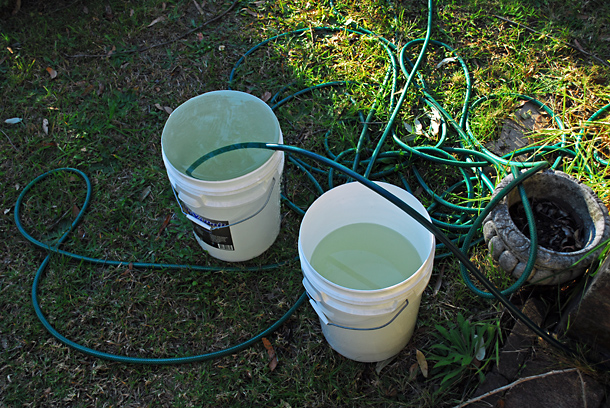
If there are still air locks in the piping for any reason (even with a hot tap open), you could also open the pressure relief safety valve to allow air to enter the heater and release the air lock. However you will have to stand there holding it open several times, so it's probably easier to open a hot tap if this works. Or try both if not much water is draining out. The water took a long time to drain out, between 30 minutes and an hour to drain completely. Note that most of the hose in this picture isn't being used to drain the heater. It's better to use a short length of hose, since the water isn't under mains pressure, only the low pressure from gravity. A long hose needs more force for the water to flow and it might not drain out all the water. You also need the end of the hose to be lower than the bottom of the heater tank.
You now have water! Reconnecting Your Hot Water HeaterWhen you want to return your hot water heater back to normal operations, re-attach the cold water inlet pipe. Remember to tighten the compression fittings at both ends of the pipe. You can use teflon thread tape over the olive (not over the threads in this case) to give a really good seal. I didn't use any and mine isn't leaking. Tighten the nuts reasonably tight but not as tight as you can possibly turn them. Brass is pretty soft compared to steel and you don't want to damage anything by overtightening. Then open the cold water inlet tap at the wall to allow the heater to fill. Note that you want to leave a hot tap open somewhere (e.g. a laundry sink), so that air can flow out of the top of the tank as water fills it up from the bottom. Once you see (cold) water flowing out of the tap and into the sink, that means the heater is full. Then, close the sink tap (like you normally would). Your hot water heater is now full of fresh cold water from the mains. Then turn back on the electrical power (or light the gas). The state of your water heater now is exactly the same as in normal use if you had a really long shower and used up all the hot water. Now all you have to do is wait for it to heat up again. If you have an off-peak hot water system, this will happen overnight so you won't have any hot water until the next day. Coming soonNext, I'll update the page with more photos of flushing the sediment from the bottom of the tank, and how to check the pressure safety valve. How to Find Water (Finding Water in the Wilderness) adapter air before bottom cold days doing drain draining floor gas heater hose hot important inlet mains next nut once onto open page pipe plumbing power pressure separate step survival tank tap thread turn until valve water whole Content is copyright © Survival.org.au 2005-2025 All Rights Reserved. Terms of Use. Definitely read the disclaimer before trying anything from this website, especially including the practices and skills. This website uses affiliate links – this doesn't cost you any more, but I get a commission on purchases made through the website. As an Amazon Associate I earn similarly from qualifying purchases. |
|||||||||||||||
 |
 IMPORTANT: Please
 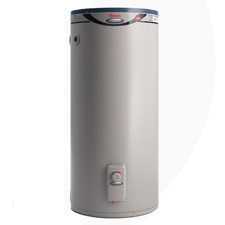 A typical Australian storage-type hot water heater. This is a 250 litre model, mine is a 315 litre. If you have a similar system at home then you have that many liters of emergency water available at all times.
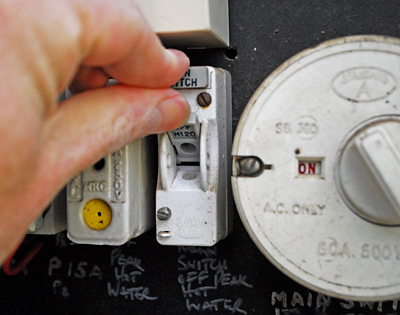 Turn off the electrical power switch to the hot water heater. If you have a gas hot water heater, turn off the gas to it.
 HOT! It's a really good idea not to drain the heater when its full of hot water. The water inside the heater can remain hot for several days after the power has been shut off.
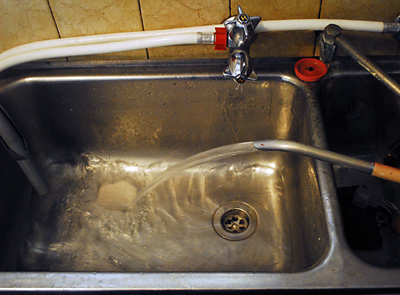 As explained above, after turning off the electrical power (or gas), let the hot water run out by turning on a hot tap until it runs cold.
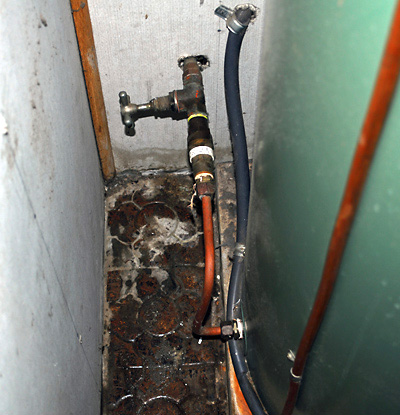 The next step is to turn off the cold water inlet tap. This was difficult because the tap was so tight and at first I had to use a towel for extra grip. After a while it loosened up.
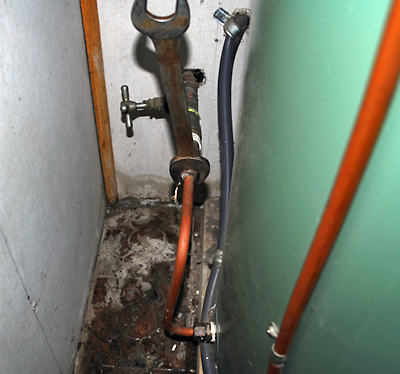 Once the tap is turned off, loosen the nut at the other end of the pipe to the heater. This will allow the pipe to swing out away from the heater when you detach the pipe from the heater end.
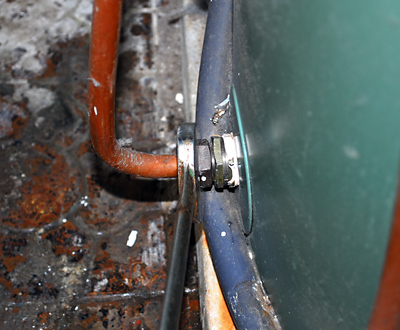 When that is done you can loosen the nut at the heater end of the cold water inlet pipe.
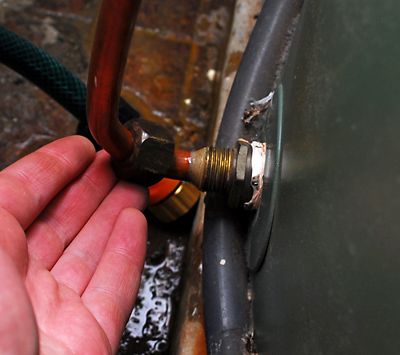 Even with the nut completely off, not much water came out.
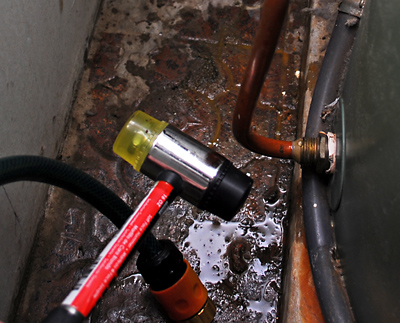 The pipe didn't come out easily so I tried hitting the pipe (not too hard) with a soft hammer to loosen it up.
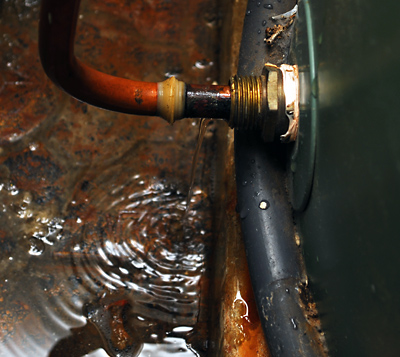 Here you can see the pipe halfway out, and there is some water spilling onto the floor. There is still less spillage than I was expecting. I think this is because there was a good seal inside the tank from having the pressure released and then the hot taps turned off.
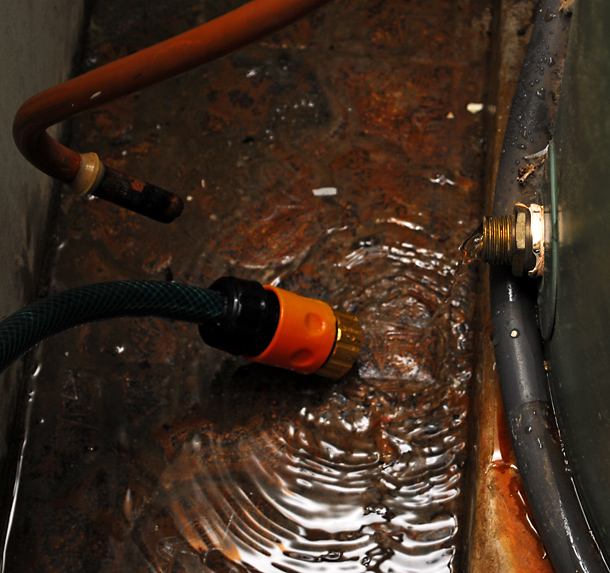
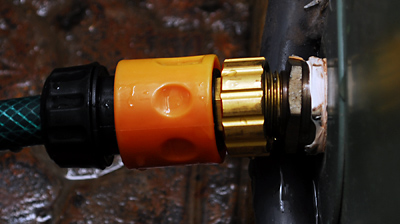 The next problem I had is that the hose adapter that I purchased did not fit. It was much too big and did not screw onto the thread.
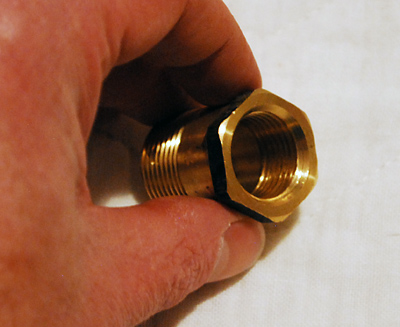 I had to go back to the hardware store and get one of these, an adapter with a 15mm female thread and a 20mm male thread on it. If you were doing this in a real survival situation it would also be really good to have a small tap to put on here, so you can turn the water on and off.
Or use a trigger nozzle at the other end of the hose.
I had to go back to the hardware store and get one of these, an adapter with a 15mm female thread and a 20mm male thread on it. If you were doing this in a real survival situation it would also be really good to have a small tap to put on here, so you can turn the water on and off.
Or use a trigger nozzle at the other end of the hose.
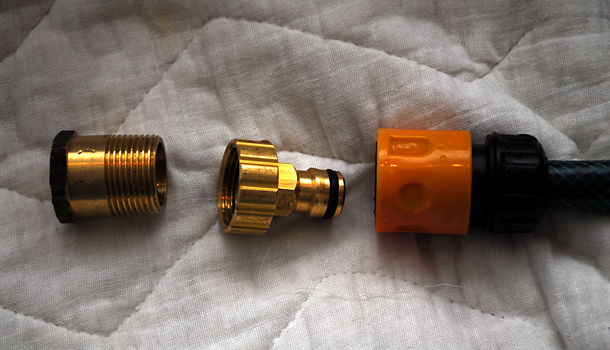
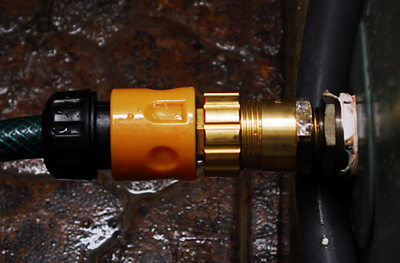 The garden hose now fits perfectly onto the water heater.